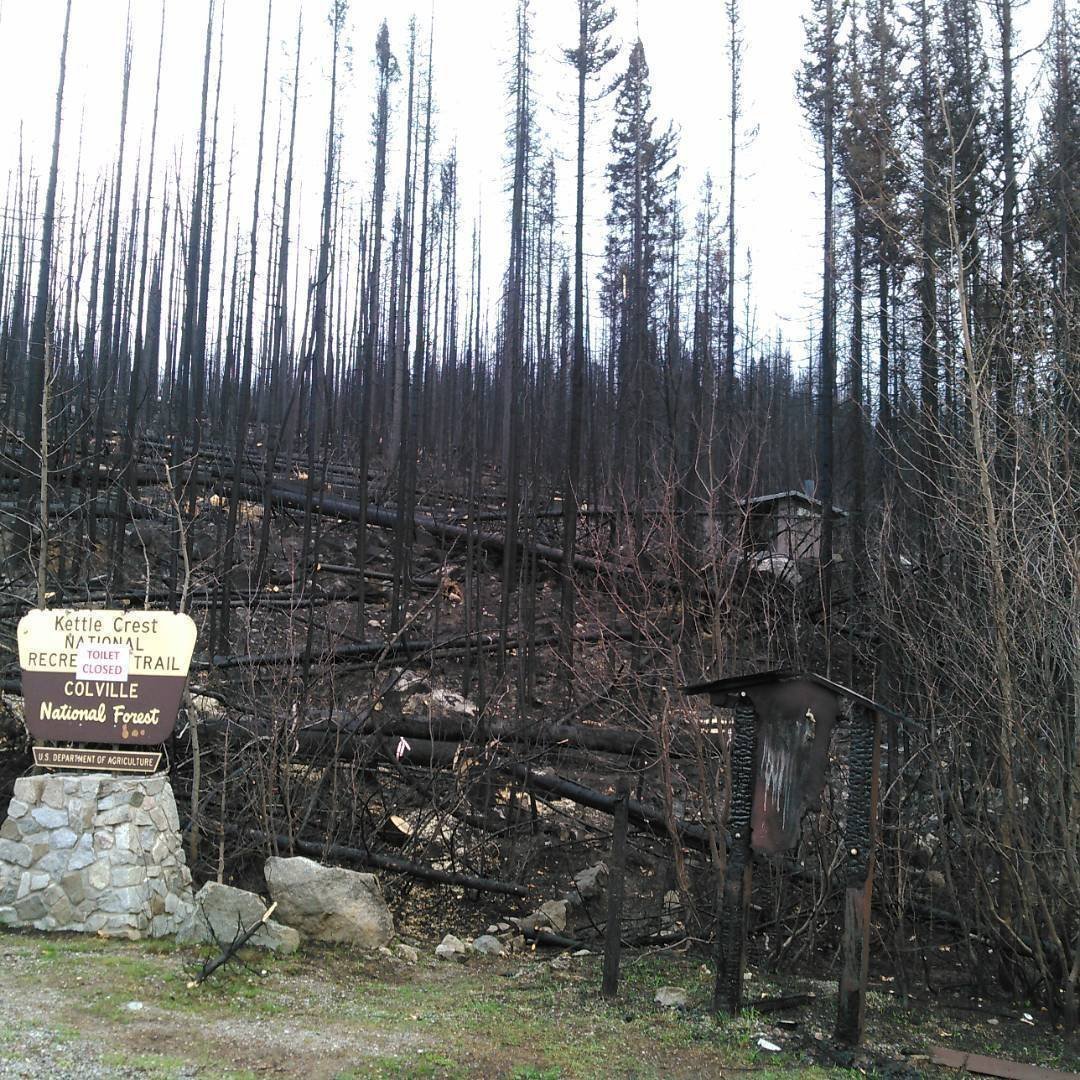
Last summer, the Katy Creek Fire, a 4600 acre fire just 9 miles south of FCCF HQ, sparked right on schedule. Following the Bulldog Fire in 2020, which followed the Stickpin Fire in 2015, the Katy Creek fire hit the 5-year stride in the summer of 2025.
There are lots of smaller fires in the general neighborhood, but these three were big and close by. Almost entirely on National Forest land, the fires burn in rugged, steep areas that, aside from a tangle of double track roads of varying quality and endless dead ends, are mostly undeveloped. As a result, the fires are fought, but in the heat of fire season, they are not prioritized with the limited resources that are deployed across the region. Instead, these fires are often left to burn outwards toward NF land and fought aggressively on the sides that threaten people/private property.
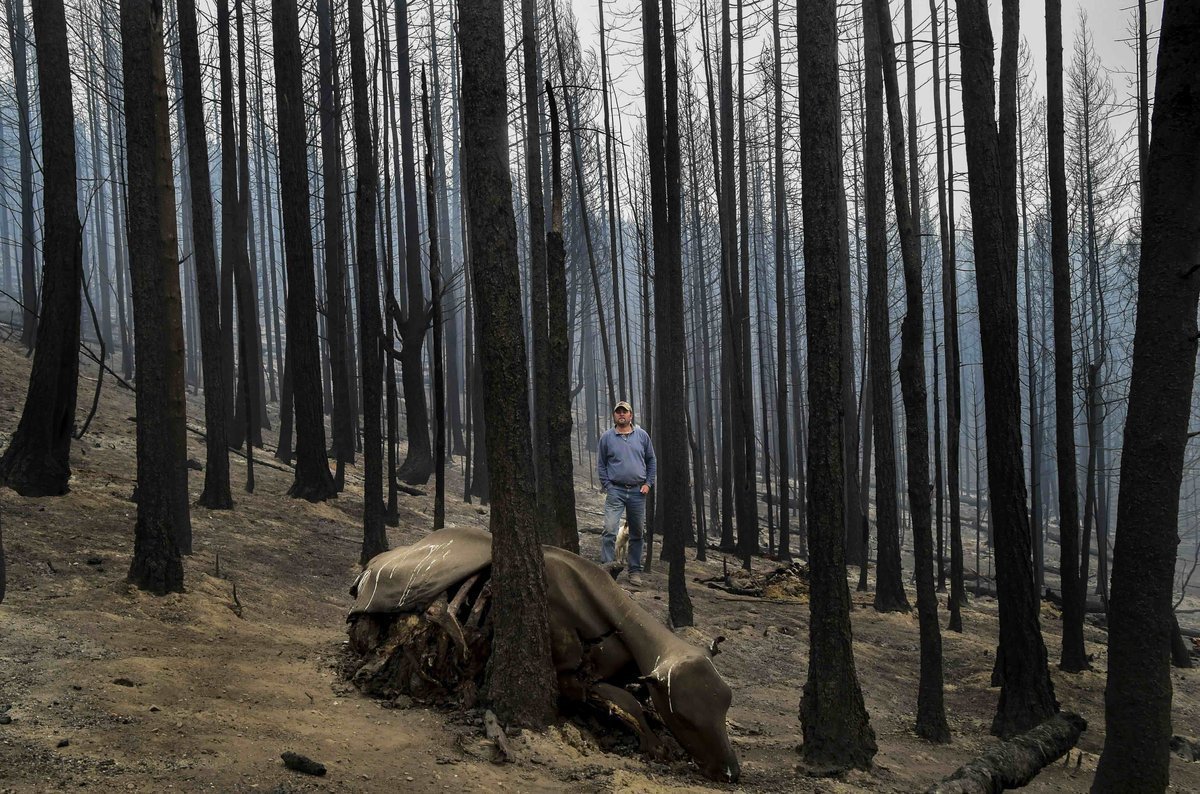
There’s lots to ponder about these fires. The idea of forest management is an interesting one. There’s really no such thing as “natural forest” – as in, “unmanaged.” If there are people, then the forest is managed. There’s evidence that native cultures did periodic burns around Shonitkwu (Kettle Falls) to encourage better foraging. And of course all of the forests have been logged multiple times in the last 150 years or so. Mining and other extraction have pushed the maze of dead end roads into every corner. Cattle ranchers will attempt to make the claim that grazing on public lands helps thin the forest to prevent wildfire, an argument that doesn’t withstand even the most casual analysis. (There is evidence that cattle/sheep grazing may help reduce wildfire intensity on public grasslands, but not in dense forests.) Unfortunately, there’s no conservation process that can return the forests to a prehistoric natural state of giant old growth. The genie is out of the bottle. So fires will happen. Ironically, given the menu of options for managing forests, perhaps the generational fire makes the most sense?
All of these fires were started by lightening strikes. Ferry County and the Okanogan Highlands stretching east of the Cascades see a handful of fast moving dry thunderstorms every summer. Fire chiefs and their volunteer departments spend many a harrowing summer evening glued to My Lightening Tracker watching the hundreds of strikes move across the state at a terrifying pace.
Poor snowpack and little rain fall pretty much guarantee a brutal fire season this year. The word is that moisture content in the trees as of April this year was at the same level that is expected by late summer. As a result of this drought stress, Ponderosa pines have been dropping most of their pinecones since early spring, looking to spread their seed before it’s too late.
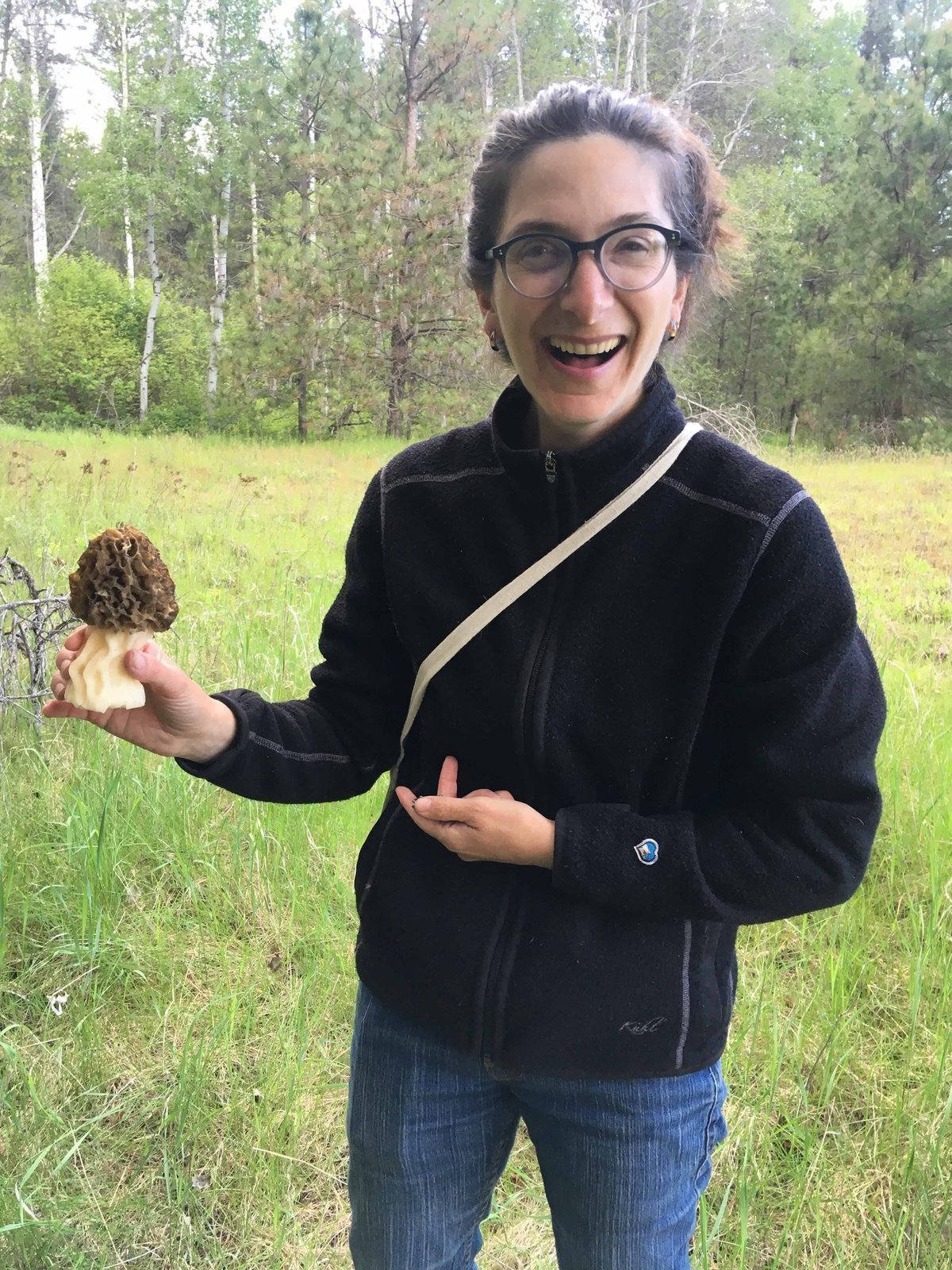
The silver lining to the 5 year fire in the neighborhood is the flush of morels that follow: 2016 and 2021 were amazing morel years. Truly an embarrassment of riches. This year was poised to be a banner year as well, thanks to the 2025 Katy Creek fire, but alas: that poor snowpack and low precipitation made for a merely good year, rather than a bumper crop. All the same, better “good” than “normal.”